Task 8 — Describing an Unusual Situation
The Celpip Plus team
Written and reviewed against the official CELPIP scoring criteria
What you'll learn: how Task 8 differs from Task 3's straightforward scene description, a structure for describing something visually odd or unexpected without losing coherence, and how to handle a picture where you're genuinely unsure what's happening.
What Task 8 actually tests
Task 8 shows you a picture depicting something strange, unexpected, or out of the ordinary — a cat sitting at a dinner table set for a meal, someone using an umbrella indoors, a car parked in an odd location — and gives you 30 seconds to prepare and 60 seconds to respond. It looks similar to Task 3's picture description, but the content is deliberately unusual, which means part of the task is naming what makes it unusual, not just describing it neutrally. Task Fulfillment specifically rewards identifying and reacting to the strangeness, not just a flat, literal description.
The describe-then-flag structure
- Describe the scene plainly first — what's literally visible, same as a normal scene description.
- Name what's unusual about it explicitly — say the words "unusual," "strange," "not what I'd expect," etc.
- Speculate on a possible explanation — a reasonable, even slightly humorous, guess at why this odd thing is happening.
- Add a personal reaction — how you'd feel or react if you saw this in real life.
- Close with a brief summary line.
This structure works because it gives you somewhere to go even when the image is genuinely puzzling — if you can't fully explain it, the "personal reaction" step still gives you real content to say.
Worked example
Prompt: A picture of a small dog sitting upright and wearing a bright yellow sweater, posed against a plain blue background.
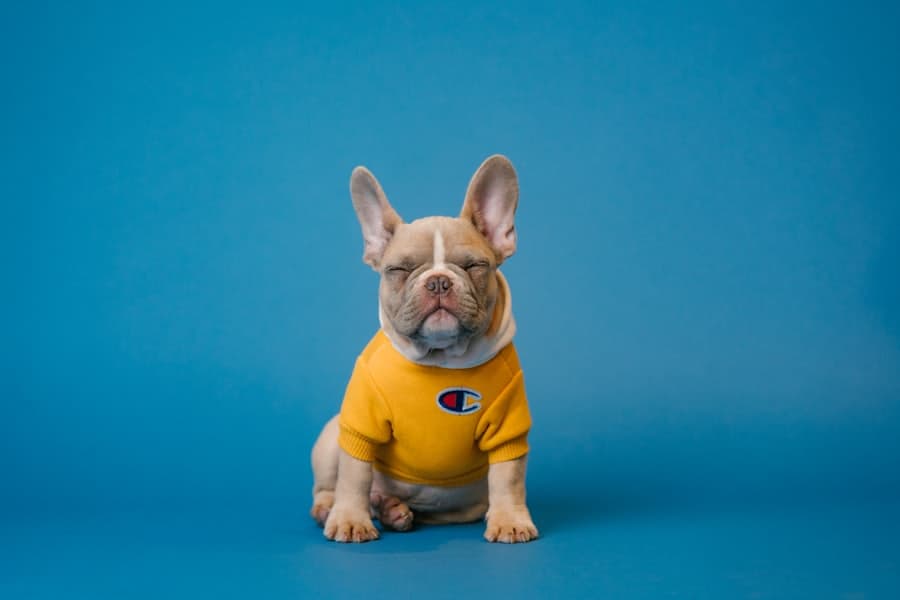
This is a pretty unusual picture. It shows a small French bulldog sitting upright and facing the camera, and instead of being bare, it's wearing a bright yellow sweater, posed neatly against a plain blue background like a studio portrait. What makes this unusual, obviously, is that dogs don't normally wear fitted, human-style clothing or sit still for a posed photo shoot the way a person would. My best guess is that this is a staged photo, probably an advertisement for a pet-clothing brand or a pet owner having fun dressing up their dog for social media. The clean background and the way the dog is centred both suggest it was set up deliberately rather than caught by chance. If I came across this online, I'd probably find it funny and a little endearing, and I'd assume it was made to grab attention. Overall, it's a lighthearted, clearly staged image that plays on the idea of treating a pet like a little fashion model.
Notice the response explicitly names the strangeness ("what makes this unusual, obviously, is...") rather than just describing the dog and sweater neutrally, and it offers a plausible guess plus a personal reaction to fill the time naturally.
Phrase bank for unusual situations
- Flagging strangeness: "What's unusual here is...", "This isn't something you'd normally see...", "It's a bit strange that..."
- Speculating: "My best guess is...", "It's possible that...", "Maybe this is because..."
- Reacting: "If I saw this in person, I'd...", "This would honestly surprise me because...", "I'd probably..."
Timing plan for 60 seconds
- 0–15s: Plain description
- 15–25s: Name what's unusual
- 25–45s: Speculate on explanation
- 45–60s: Personal reaction + close
Common mistakes
- Describing the picture completely neutrally, as if it were an ordinary Task 3 scene, without ever acknowledging it's strange — this misses part of Task Fulfillment.
- Getting stuck trying to find the "correct" explanation instead of offering a reasonable guess and moving on — there's rarely one right answer.
- Going silent because the image is confusing — the personal-reaction step exists specifically as a fallback that always gives you something genuine to say.
Recap
Task 8 rewards noticing and naming what's odd about a picture, not just describing it as if it were ordinary. Describe plainly first, explicitly flag the unusual element, offer a reasonable (even playful) explanation, and add a personal reaction — this structure keeps you talking confidently even when the image itself leaves you a little puzzled.