CELPIP Listening
Part 2 of 6
Daily Life Conversation
You hear an everyday conversation between two people and answer questions on what was said. The exchange is natural and quick, so the challenge is holding on to specifics — names, plans, preferences — as they go by.
104 practice taskssign in (free) to start
Select a practice
A taste of the set — 104 in total. The first is free; a free account opens the rest.
What this part asks of you
- An informal conversation set in an ordinary situation
- One play only, with no transcript
- Detail questions on who said what and what was decided
How CELPIP Listening is scored
CELPIP Listening is scored by how many questions you answer correctly across its six parts. That total is converted to a CELPIP level from 1 to 12 — there are no separate marking criteria for Listening.
How to prepare for Daily Life Conversation
- Note who the two speakers are to each other, because their relationship often colours the details you are asked about.
- Follow shifts in the topic, since casual conversations wander and questions can target any part of the exchange.
- Pay attention to feelings and casual asides, as tone and small details are frequently tested alongside the main facts.
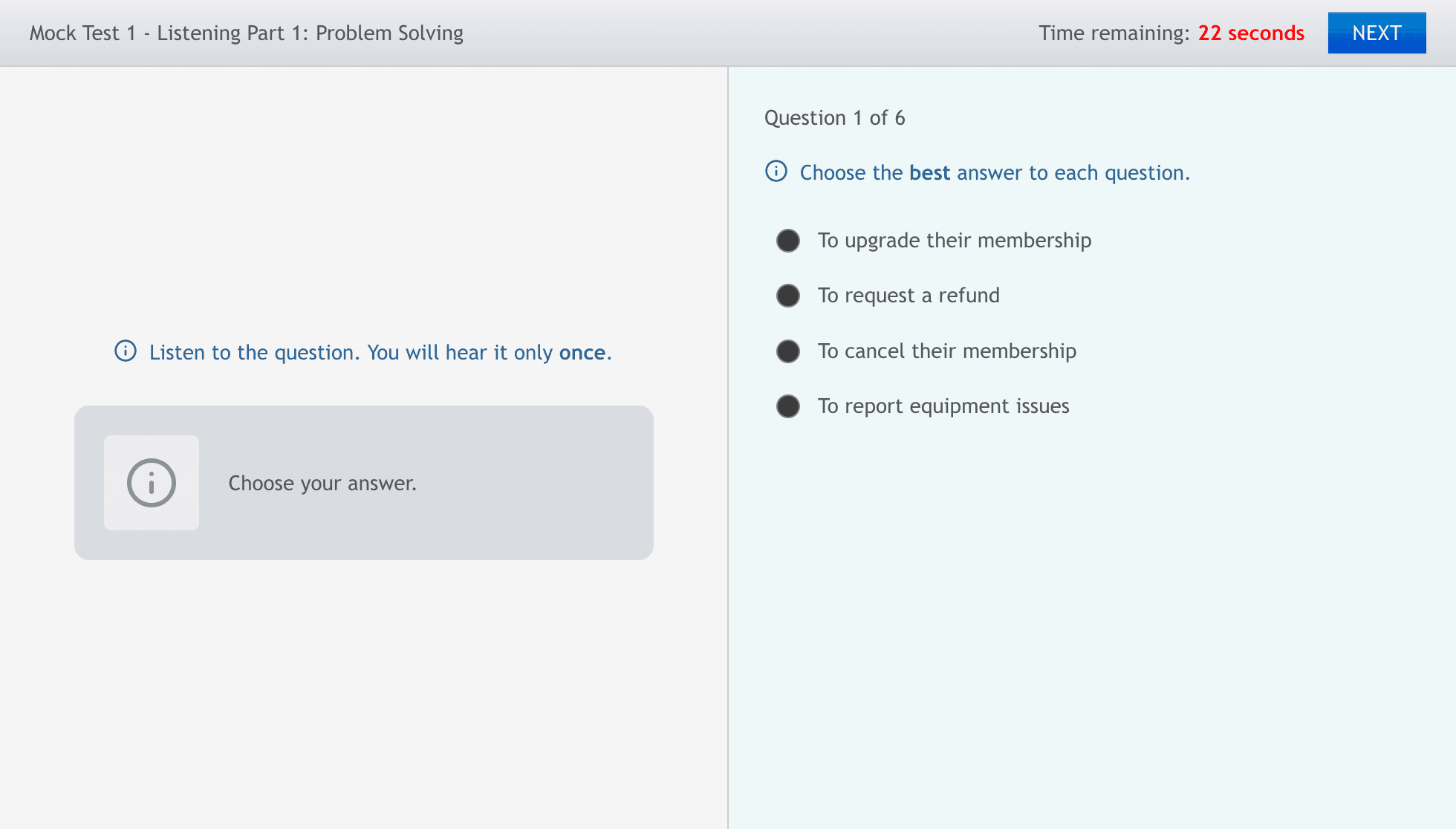
Practise on the real interface
The same screen, timer and controls as test day — rebuilt so nothing on the exam is a surprise.
Daily Life Conversation: frequently asked questions
It is an everyday, informal exchange between two people on an ordinary topic, and the questions ask about details from what they say.
The language is casual, but because the audio plays once and details come quickly, careless listening can cost you; treat it with the same focus as any other part.
You should be comfortable with natural, informal speech, since everyday conversations use relaxed phrasing, but you are not expected to know obscure slang.
Only once. There is no replay and no transcript, so you should listen actively and take brief notes as it plays.