CELPIP Listening
Part 1 of 6
Problem Solving
You listen to a conversation in which someone is dealing with a problem, then answer questions about the situation, the options discussed, and the solution they reach. The questions arrive as the conversation unfolds, so you answer from memory with no transcript to check back against.
128 practice taskssign in (free) to start
Select a practice
A taste of the set — 128 in total. The first is free; a free account opens the rest.
What this part asks of you
- A single conversation between two speakers about a practical problem
- Questions that come between segments — you can't skip ahead or replay
- Answers that test whether you tracked the details and the final decision
How CELPIP Listening is scored
CELPIP Listening is scored by how many questions you answer correctly across its six parts. That total is converted to a CELPIP level from 1 to 12 — there are no separate marking criteria for Listening.
How to prepare for Problem Solving
- Track the specific obstacle being discussed and each option raised to solve it, since questions often hinge on why one solution was chosen over another.
- Jot a quick note between segments while the audio pauses, because you answer as you go and cannot go back once the conversation moves on.
- Listen for the speakers' reactions and agreement, as the resolution they settle on is a common target for questions.
Practise on the real interface
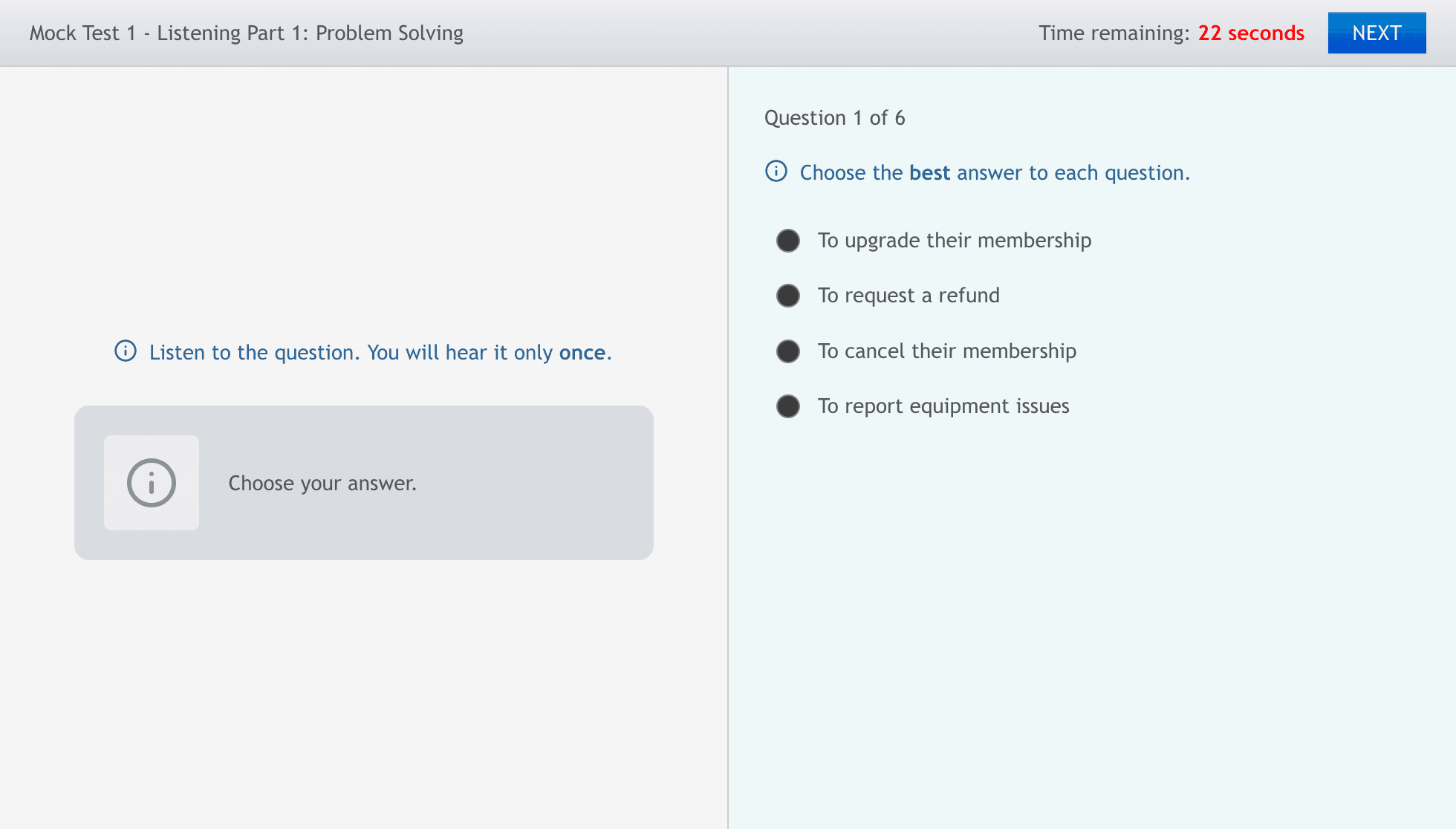
The same screen, timer and controls as test day — rebuilt so nothing on the exam is a surprise.
Problem Solving: frequently asked questions
It is not scored on criteria like Writing or Speaking; you earn points for each correct answer, and your total across the Listening section is converted to a level from 1 to 12.
No. Questions appear between segments of the conversation, and once you move forward the audio continues, so you should answer each one before the next segment plays.
No, the conversation plays only once with no transcript, so you need to catch details the first time you hear them.
Focus on the problem itself, the options the speakers weigh, and the solution they agree on, since these are the most commonly tested points.