CELPIP Listening
Part 3 of 6
Information
You listen to a short informational talk — a description, an explanation, an announcement — and answer questions about its content. It rewards note-taking, because the facts come faster than you can hold them all in your head.
90 practice taskssign in (free) to start
Select a practice
A taste of the set — 90 in total. The first is free; a free account opens the rest.
What this part asks of you
- A single speaker giving factual information
- Questions on specific details, not just the gist
- No replay, so brief notes beat trying to memorise
How CELPIP Listening is scored
CELPIP Listening is scored by how many questions you answer correctly across its six parts. That total is converted to a CELPIP level from 1 to 12 — there are no separate marking criteria for Listening.
How to prepare for Information
- Listen for concrete facts such as names, places, times and instructions, because a short informational talk is dense with details you will be asked to recall.
- Note the purpose of the announcement early, as knowing what it is about helps you slot the details into place.
- Keep your notes brief and factual, since the questions test specific information rather than overall opinion.
Practise on the real interface
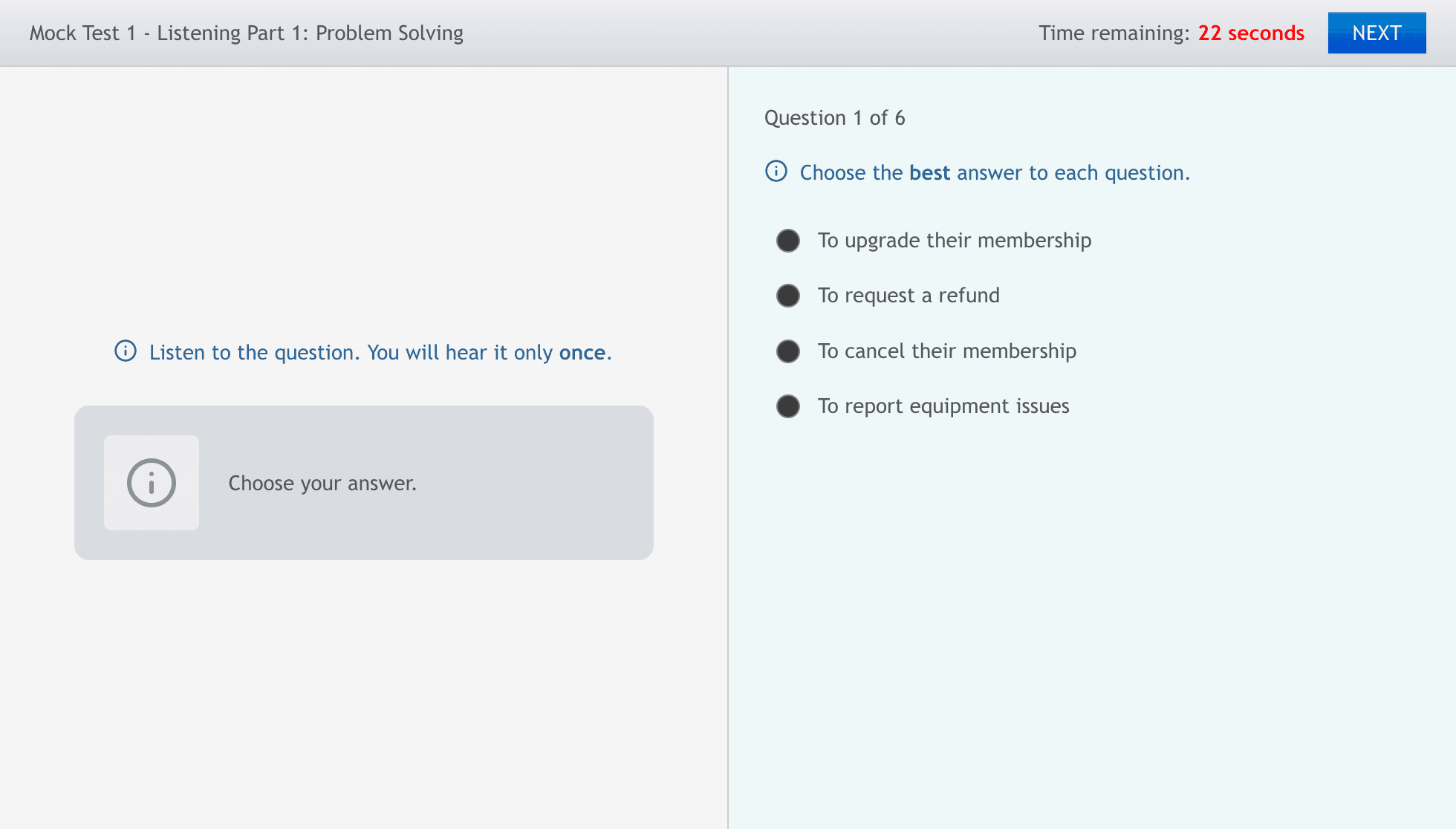
The same screen, timer and controls as test day — rebuilt so nothing on the exam is a surprise.
Information: frequently asked questions
You hear a short factual talk or announcement, such as an informational message, and answer questions about the specific details it contains.
Not really; this part is about factual detail, so your job is to catch and retain concrete information rather than judge viewpoints.
Yes, jotting key facts like figures, names and instructions helps, because the talk plays once and the questions target precise details.
Like the rest of Listening, it is scored by the number of correct answers, which contributes to a converted level from 1 to 12 with no separate criteria.