CELPIP Reading
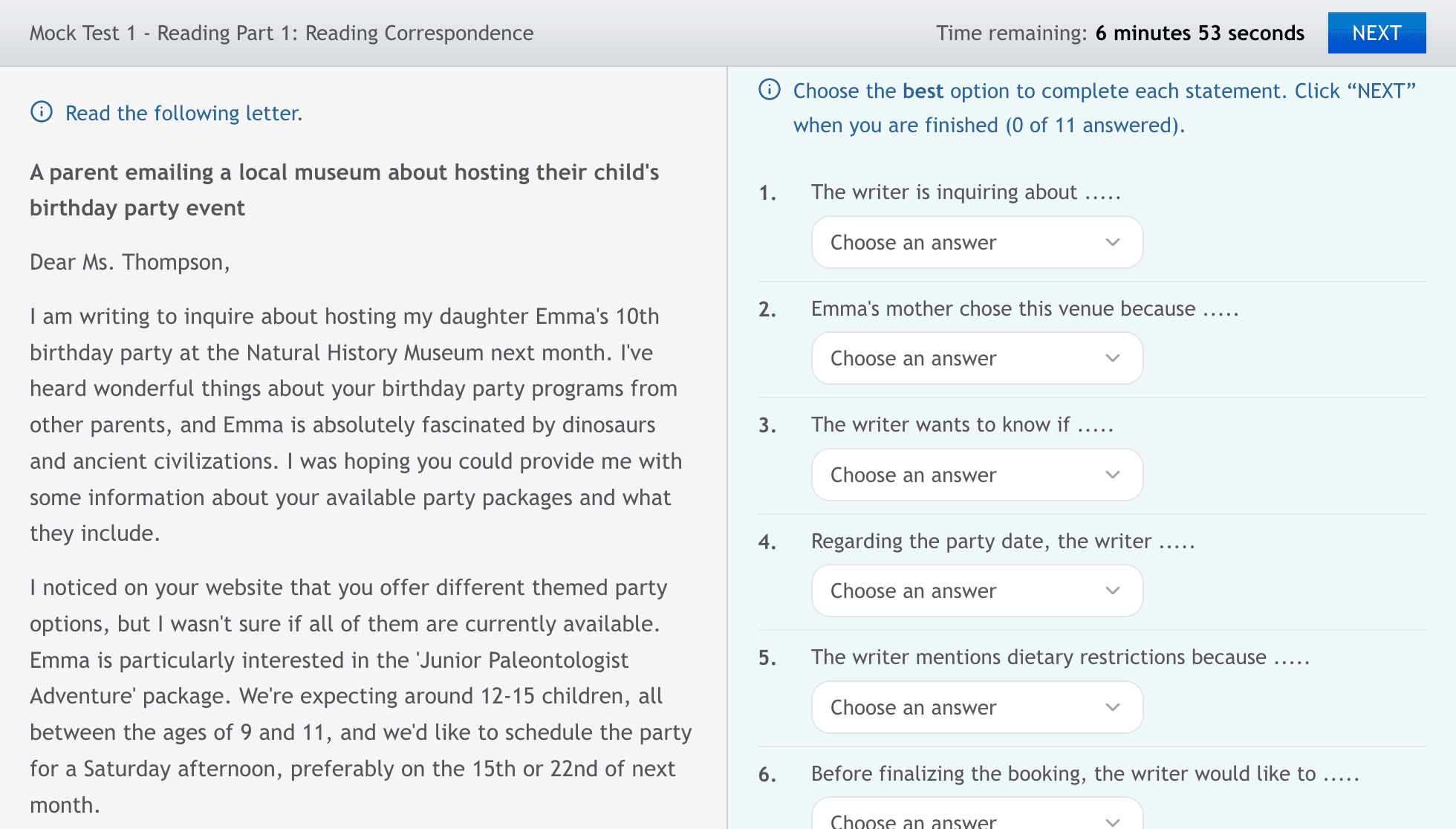
Four parts, 38 questions, and a clock that does not wait.
CELPIP Reading is a pacing test as much as a comprehension one. Most people who lose marks here could have answered the questions correctly with more time — which means the fix is rarely 'read better' and almost always 'skim, scan, and commit faster'.
- 648 Reading practice tasks, covering all 4 task types
- 30 full-length mock exams — plus unlimited more, generated on demand by AI
- Timed at real test pacing, so you find your speed before test day rather than during it
- 4
- parts, from correspondence to viewpoints
- 38
- questions in the section
- 55–60
- minutes for the whole section
Practise Reading, part by part
Every Reading part in the real exam order, with the true number of tasks in each. Open a part to see what it covers and start — 648 in all.
Find out where the minutes actually go
Almost everyone who loses marks on Reading could have answered those questions correctly with more time. That makes pacing the thing to measure — and one part is usually eating a disproportionate share of it.
- Four parts, timed separately — so you can see which one is draining the clock.
- Real test pacing — under a minute and a half per question, including the passage.
- Full sections end to end — because pacing that holds for ten questions can still collapse at thirty.
See which part is eating your time.
A timed section shows you where the minutes actually go — usually one part, not all four — so you know what to drill instead of re-reading everything.

The full Reading course
12 free lessons, in order — strategy, worked examples, and the errors that cost the most marks.
648 Reading tasks, split by task type
Not a rounded-up marketing figure — this is the actual count in the question bank, broken out so you can see there is enough of the part you keep losing marks on.
- Reading for Viewpoints201
- Reading Correspondence163
- Reading for Information144
- Reading to Apply a Diagram140
- 30
- prebuilt full-length mock exams, timed end to end
- Unlimited
- brand-new mock exams, generated on demand by AI
- 2,064
- practice tasks across all four skills
Common questions
Roughly 55 to 60 minutes for about 38 questions across four parts. That is under a minute and a half per question including reading the passage, which is why pacing decides most scores here.
Reading Correspondence, Reading to Apply a Diagram, Reading for Information, and Reading for Viewpoints. Each rewards a different reading mode — the diagram part in particular is closer to a matching task than to reading comprehension.
Skim the passage for shape, then read the questions, then scan back for the specific answer. Reading every word first is the single most common way to run out of time on this section.
Skim each passage for its shape first, then read the questions, then scan back for the specific detail each one asks about — reading every word up front is the most common way to run out of time. Watch the clock part by part, and treat the diagram part as a matching task rather than close reading. Because the fix is almost always pacing, timed sectional practice moves scores more than reading tips alone.
Yes. You can practise full, timed Reading sections free, rebuilt screen for screen from the real four-part test, and every question is marked so you see the correct answer and where your time went. When you want the end-to-end experience, take a full timed mock exam.
Practise the four parts separately so you can see which one is draining the clock, then put your time into that part. Most people who lose marks here could have answered correctly with more time, so the fastest gains come from pacing and from the free part-by-part lessons rather than from reading more slowly.
Still deciding? Start free — no card needed