CELPIP Reading
Part 4 of 4
Reading for Viewpoints
You read an opinion piece that presents more than one point of view and answer questions that separate the writer's stance from the views they report. The trap is attributing an opinion to the wrong person.
201 practice taskssign in (free) to start
Select a practice
A taste of the set — 201 in total. The first is free; a free account opens the rest.
What this part asks of you
- An article carrying several viewpoints
- Questions that ask whose opinion is whose
- A follow-up passage continuing the topic
How CELPIP Reading is scored
CELPIP Reading is scored by how many questions you answer correctly across its four parts. Your total is converted to a CELPIP level from 1 to 12, with no separate marking criteria.
How to prepare for Reading for Viewpoints
- Separate the writer's own view from the other opinions quoted in the article, because keeping the sources straight is central to this task.
- Note each viewpoint with whose it is as you read, so attribution questions are easy to answer later.
- Read the final part carefully, since opinion articles often reveal the writer's own stance near the conclusion.
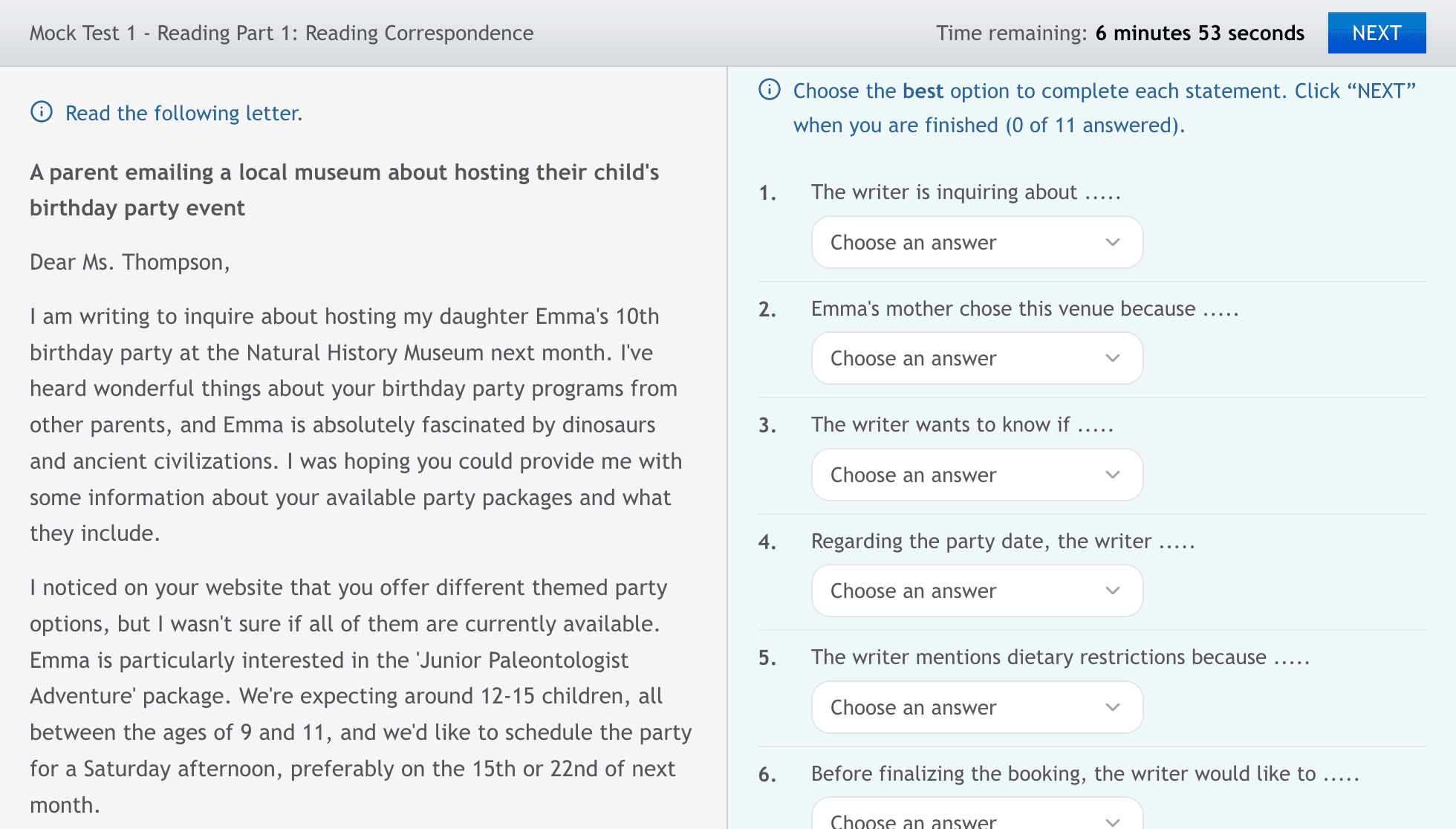
Practise on the real interface
The same screen, timer and controls as test day — rebuilt so nothing on the exam is a surprise.
Reading for Viewpoints: frequently asked questions
The article presents several opinions, and you must distinguish the writer's own view from the views of others they discuss.
Watch for phrases that signal reported or contrasting opinions, and note who holds each view, so you can tell the writer's stance from the ones they cite.
Read for each distinct stance and who holds it, since this part focuses on understanding and correctly attributing the viewpoints in the piece.
No, like all Reading tasks it is scored by correct answers converted to a level from 1 to 12, with no separate criteria.