CELPIP Reading
Part 2 of 4
Reading to Apply a Diagram
You read a diagram, table or form alongside a short message, and answer questions that require matching information between the two. It's as much about locating the right cell as understanding the words.
140 practice taskssign in (free) to start
Select a practice
A taste of the set — 140 in total. The first is free; a free account opens the rest.
What this part asks of you
- A visual — a chart, table or form — plus a short text
- Questions that cross-reference the two
- Accuracy under time pressure over deep reading
How CELPIP Reading is scored
CELPIP Reading is scored by how many questions you answer correctly across its four parts. Your total is converted to a CELPIP level from 1 to 12, with no separate marking criteria.
How to prepare for Reading to Apply a Diagram
- Read the message alongside the diagram, because the correct answers come from matching what one person writes to what the chart or form shows.
- Locate the exact row, column or field a question points to rather than skimming the whole diagram.
- Watch for details in the message that override or update the diagram, since the two sources are meant to be read together.
Practise on the real interface
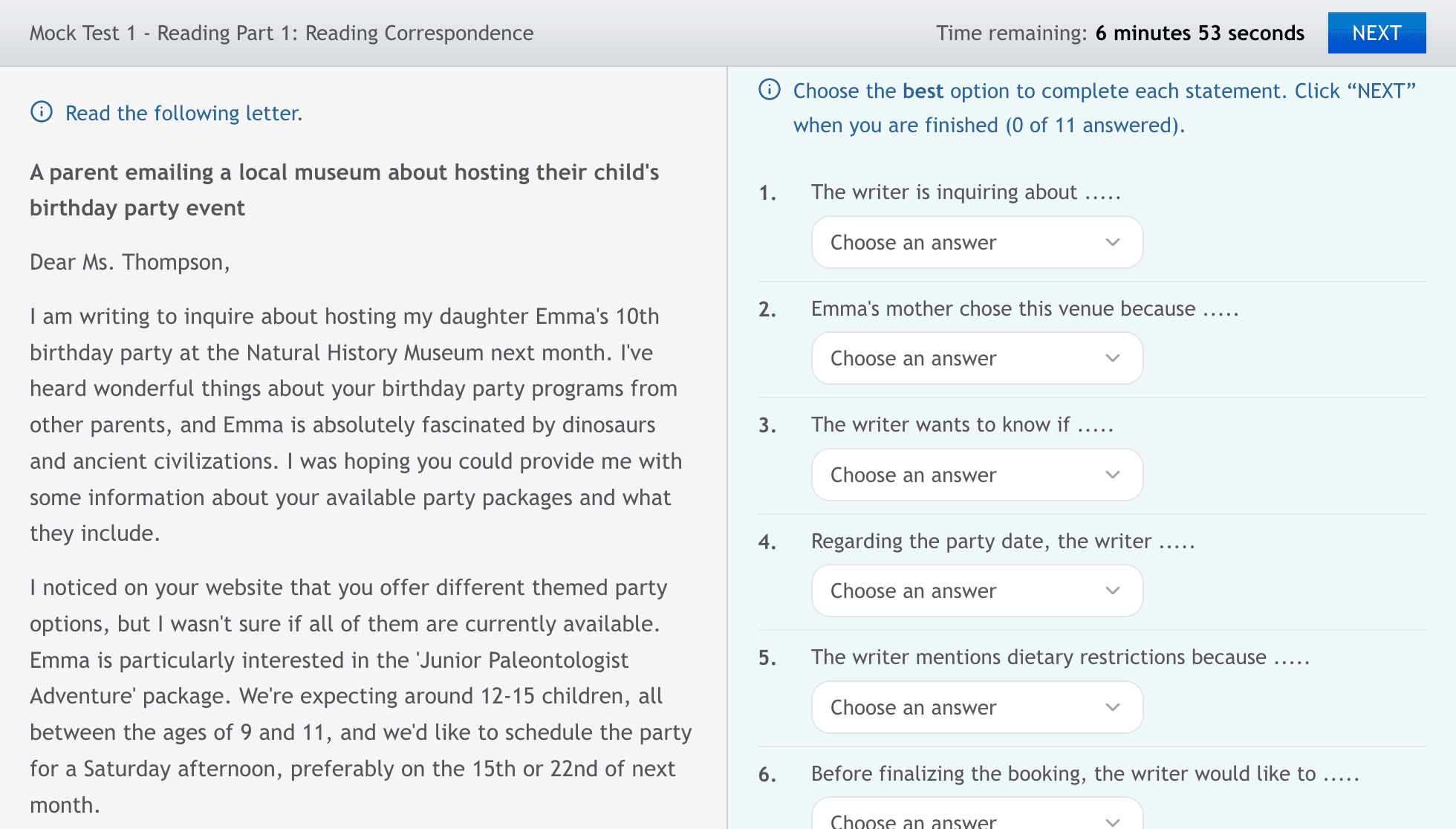
The same screen, timer and controls as test day — rebuilt so nothing on the exam is a surprise.
Reading to Apply a Diagram: frequently asked questions
You read a chart, table, or form together with a short message and answer questions by cross-referencing information between the two.
Instead of a prose passage alone, you work with visual or structured information, so scanning a diagram accurately matters as much as reading the text.
Read the message first to know what you are looking for, then find the matching entry in the diagram rather than reading every cell.
Yes, the task is specifically about cross-referencing, so many answers only make sense when you read both sources together.