CELPIP Speaking Practice Questions: 40 Prompts for All 8 Tasks
CELPIP-style Speaking practice questions, five for each of the eight tasks, written in the real task format. Each has the timing and a short plan for how to answer it.
The Celpip Plus team
Written and reviewed against the official CELPIP scoring criteria
These are CELPIP-style practice questions, written by Celpip Plus in the real task format. They aren't real CELPIP test questions, but each one follows the shape, the timing and the kind of situation you'll get on test day. There are five for each of the eight Speaking tasks.
Try each question before you open its plan. Give yourself the preparation time, then speak out loud for the full response time, ideally into a recording. Afterwards, open Show answer plan to check what a strong answer covers. The full model answers are on each task's template, linked at the end of every section.
Task 1: Giving Advice
You give advice to a named person with a problem, so pick one clear recommendation and support it.
Timing: 30 seconds to prepare, 90 seconds to speak.
Question 1
Your neighbour Farah wants to start running, but she has never exercised regularly and gets bored after a week or two. Give her advice about how to build the habit.
Show answer plan
- Name her problem in one sentence, then give one clear recommendation: a beginner run-walk program, three short sessions a week.
- Support it with two practical steps, such as joining a free running group at the community centre so someone expects her there.
- Add one caveat (see a doctor first if her knees hurt) and close by repeating the recommendation.
Question 2
Your friend Mateo has a large credit card balance, and every month he pays only the minimum. Give him advice about how to pay off the debt.
Show answer plan
- Recommend one plan straight away: stop using the card and pay a fixed amount above the minimum every payday.
- Back it up with specifics: list his spending for a month, cut two costs, and ask his bank about a lower-interest consolidation loan.
- Close with a realistic timeline, so the advice sounds achievable rather than strict.
Question 3
Your coworker Aisha moved to Canada three months ago. She likes her job, but she finds it hard to make friends outside work. Give her advice.
Show answer plan
- Acknowledge that the first months in a new country are lonely, then recommend one main step: join a regular group activity.
- Give two concrete options, such as a weekly volunteer shift at the food bank or a conversation circle at the public library, and say why repetition builds friendships.
- Add a smaller tip (invite one coworker for coffee) and finish on encouragement.
Question 4
Your brother Kevin is in his first year of college. He works 30 hours a week at a grocery store, and he is falling behind in his courses. Give him advice.
Show answer plan
- State your advice early: cut his hours to about 15 a week for the rest of the term.
- Explain why with two reasons, such as failing a course costs more than the lost pay, and that the college may offer bursaries or a student loan.
- Suggest one first step (talk to his manager about fewer shifts this week) and close by restating the advice.
Question 5
Your friend Lena takes a bus and a train for 90 minutes each way to her job in Mississauga. She is thinking about buying a car. Give her advice about whether she should.
Show answer plan
- Give a clear answer in your first sentence: yes, buy a reliable used car, or no, stay on transit.
- Compare the real costs you'd weigh, such as insurance, gas and parking against her monthly pass, plus the hours a week she would save.
- Add a middle option (carpooling with a coworker or driving to a GO station) as a caveat, then close on your recommendation.
Task 2: Talking about a Personal Experience
You tell a true story from your own life that fits the prompt, in the past tense and in order.
Timing: 30 seconds to prepare, 60 seconds to speak.
Question 1
Talk about a time when you moved to a new home. Describe what happened on moving day and what you would do differently next time.
Show answer plan
- Set the scene in one sentence: when it was, where you moved from and to, and who helped.
- Walk through the day in order with past-tense verbs and sequencing words, building to the one thing that went wrong.
- Finish with what you would change next time, so the answer ends on a reflection instead of stopping.
Question 2
Talk about a time when a bus, train or flight you were relying on was cancelled or badly delayed. Explain how you still got where you needed to go.
Show answer plan
- Open with where you were going and why it mattered, such as a job interview or a family event.
- Narrate the problem, then the steps you took in order: first, then, after that, in the end.
- Close with how it turned out and what you now do differently when you travel.
Question 3
Talk about a skill you learned as an adult, such as driving, cooking or a new sport. Describe what made it difficult and how you kept going.
Show answer plan
- Pick one skill in the prep time and name it in your first sentence with when you started.
- Describe one specific moment when it was hard and what you did about it, rather than listing general problems.
- End with where you are now and one lesson you took from it.
Question 4
Talk about a time when you received excellent service, from a store, a clinic or a government office. Describe what happened and why you still remember it.
Show answer plan
- Set the scene: where you were, what you needed, and why you were worried or in a hurry.
- Describe exactly what the staff member did, in order, with one detail that shows why it was more than ordinary service.
- Close by explaining why it stayed with you.
Question 5
Talk about a family celebration you remember well, such as a wedding, a birthday or a holiday. Describe what happened and why it was important to you.
Show answer plan
- Choose one event and give the who, when and where in your first sentence.
- Tell two or three moments from the day in order, using past-tense verbs and one or two sensory details.
- Finish with why it mattered to you, not with a general comment about families.
Task 3: Describing a Scene
On the test you see a photo, and each question here gives you one too. Describe it as if your listener can't see it.
Timing: 30 seconds to prepare, 60 seconds to speak.
Question 1
You are walking to work the morning after a heavy snowstorm.
Describe some things that are happening in the picture as well as you can. The person you're talking to can't see the picture.

Photo: Sergei Starostin on Pexels Show answer plan
- Name the setting first: a city sidewalk after a snowstorm, with a huge snowbank half burying a row of parked cars and pedestrian-crossing signs behind it.
- Describe the main action with present continuous verbs: a man in a camouflage jacket and cap is swinging a large shovel and throwing a heap of snow into the air.
- Move to the background (people in winter coats, some with backpacks, walking along the wet sidewalk), then close with one guess tied to a clue, such as the storm ending only last night because the snowbank is still so high.
Question 2
You are shopping at a busy covered farmers' market on a summer morning.
Describe some things that are happening in the picture as well as you can. The person you're talking to can't see the picture.

Photo: @coldbeer on Pexels Show answer plan
- Open with the setting: a market stall piled with baskets of strawberries and raspberries, with carrots, green onions and herbs at the front.
- Describe the people from left to right: a woman in a pink top arranging fruit at the back, a bearded man in glasses reaching across the strawberry baskets, and a customer holding a plastic bag as she looks at the vegetables.
- Add one inference from a clue, such as berries being in season because the stall is full of them, and finish with the overall mood.
Question 3
Your friend's family is getting ready for a dinner party at home.
Describe some things that are happening in the picture as well as you can. The person you're talking to can't see the picture.

Photo: August de Richelieu on Pexels Show answer plan
- Name the setting first: a large white kitchen where six people are gathered around an island covered in food.
- Give each person an action, in order from left to right: a smiling man in a light jacket, a boy in a yellow shirt watching a man in a beige blazer lean over the dishes, a woman opening a bottle, and a woman in a striped dress cutting tomatoes beside a young girl.
- Point to the food on the island (salads, cheese cubes, olives, a jug of lemon water) as your clue for one guess, such as guests arriving soon, and close.
Question 4
You are on holiday at a long sandy beach by the ocean.
Describe some things that are happening in the picture as well as you can. The person you're talking to can't see the picture.
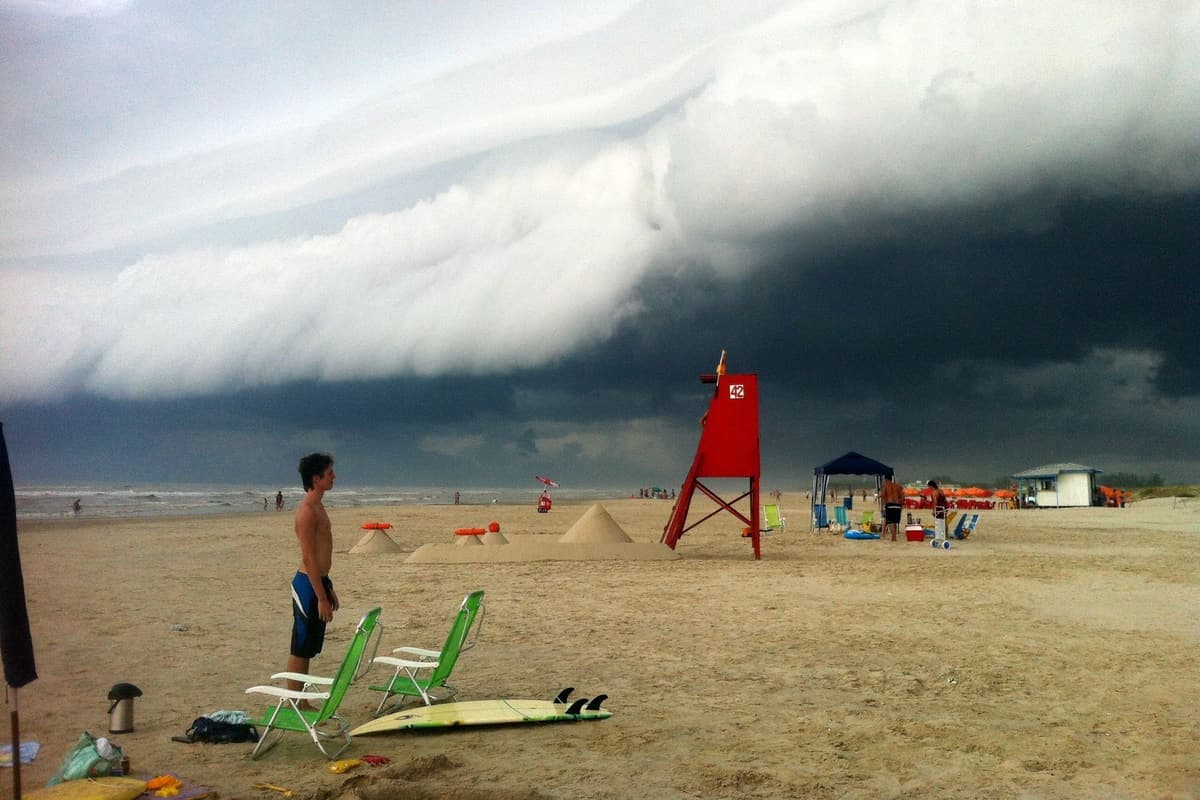
Photo: Cristiana Bonzanini on Pexels Show answer plan
- Open with the setting and its most striking detail: a wide sandy beach under a huge, low wall of dark storm cloud rolling in from the sea.
- Describe what's on the sand from front to back: a shirtless young man in blue shorts standing beside two green folding chairs and a surfboard, a red lifeguard tower, and a few people gathered by a small blue tent further down.
- Close with one inference tied to a clue, such as it being a sunny beach day until a few minutes ago, because the chairs and the surfboard are still out.
Question 5
You are visiting a friend at her office on a busy weekday.
Describe some things that are happening in the picture as well as you can. The person you're talking to can't see the picture.

Photo: Yan Krukau on Pexels Show answer plan
- Set the scene: a small bright office with a sloped ceiling and a white table covered with charts, sticky notes and a magnifying glass.
- Describe the two seated people first (a man in a suit signing a document, a woman in a checked jacket working on a laptop), then move to the two colleagues standing behind them with coffee cups, looking at a tablet.
- Make one inference, such as a deadline or a client meeting coming up, and name the clue that supports it.
Task 4: Making Predictions
You say what will most likely happen next, backing each prediction with something in the picture. As on the real test, each question reuses the picture from the same-numbered Task 3 question.
Timing: 30 seconds to prepare, 60 seconds to speak.
Question 1
Same picture as Task 3, Question 1, just as the real test reuses the Task 3 picture.
It is still early, on the same snowy city sidewalk.
In this picture, what do you think will most probably happen next?
Photo: Sergei Starostin on Pexels Show answer plan
- Make your main prediction first: the snow flying off the shovel is going to land on the parked car buried in the snowbank.
- Chain a second prediction from it: the car's owner, or one of the people walking past, is likely to complain, and the man may have to dig the car out.
- Support each idea with a clue (the huge snowbank, the wet sidewalk, the people behind him) and close on how the morning ends.
Question 2
Same picture as Task 3, Question 2, just as the real test reuses the Task 3 picture.
You are still standing at the busy farmers' market stall.
In this picture, what do you think will most probably happen next?
Photo: @coldbeer on Pexels Show answer plan
- Make your main prediction first: the woman holding the plastic bag is going to buy a bunch of carrots or green onions.
- Chain a second prediction from a clue: the bearded man is reaching across the strawberry baskets, so he will probably hand one to a customer, and with this many shoppers the berries are likely to sell out by noon.
- Finish with the woman in the pink top at the back, such as her bringing out more fruit to fill the empty trays, using a varied future form.
Question 3
Same picture as Task 3, Question 3, just as the real test reuses the Task 3 picture.
Your friend's family has nearly finished getting the food ready.
In this picture, what do you think will most probably happen next?
Photo: August de Richelieu on Pexels Show answer plan
- Lead with your main prediction: in a few minutes the family will carry the dishes to the table and sit down to eat.
- Back each idea with a clue: the woman opening the bottle is going to pour drinks into the empty glasses, and the man in the beige blazer is likely to taste one of the salads first.
- Close on the party itself, such as the doorbell ringing soon and the smiling man in the light jacket going to greet the guests.
Question 4
Same picture as Task 3, Question 4, just as the real test reuses the Task 3 picture.
The sky over the beach is getting darker by the minute.
In this picture, what do you think will most probably happen next?
Photo: Cristiana Bonzanini on Pexels Show answer plan
- Open with the most likely event: the storm will reach the beach within minutes, bringing strong wind and heavy rain.
- Predict what the people will do, linking each idea to a clue: the young man will grab the surfboard and folding chairs, and the people near the blue tent will pack up fast.
- Finish with where they are likely to take shelter, using a varied future form (is likely to, will probably).
Question 5
Same picture as Task 3, Question 5, just as the real test reuses the Task 3 picture.
Your friend's team is finishing an important piece of work.
In this picture, what do you think will most probably happen next?
Photo: Yan Krukau on Pexels Show answer plan
- Make your main prediction first: the man in the suit is going to finish signing and pass the document to the two colleagues standing behind him.
- Chain a second prediction from the clues: the pair with the tablet and coffee cups will probably sit down, and the four of them will go over the charts together.
- End with a likely result, such as the woman on the laptop sending the finished report to a client before the end of the day.
Task 5: Comparing and Persuading
First you choose one of two options. Only then do you see a third option that a family member prefers, and you persuade them that yours is better. Each question below works the same way: pick an option to see the third one.
Timing: 60 seconds to choose, then 60 seconds to prepare and 60 to speak.
Question 1
Your family is getting a $2,000 tax refund and has to decide how to use it.
Step 2
Your mother prefers a different option:
Putting it all into savings- All $2,000 goes into the emergency fund
- Earns interest in a high-interest savings account
Persuade your mother that your choice is better. You have 60 seconds.
Show answer plan
- In step 1, choose quickly and remember one strong reason, such as the old laptop slowing down everyone's schoolwork.
- In step 2, open by naming her option and saying yours is better, then compare the two on cost and on what the family actually gets.
- Admit one real advantage of saving, answer it, and close by restating your choice.
Question 2
Your family needs another way to get around town.
Step 2
Your father prefers a different option:
An electric cargo bike- $3,500 to buy
- Carries two children or a week of groceries
- Charges from a regular outlet
Persuade your father that your choice is better. You have 60 seconds.
Show answer plan
- Pick in step 1 and note your deciding factor, such as winter weather or the distance to work.
- In step 2, compare your choice with the cargo bike on at least two factors (cost, weather, how far each one can take you) using 'whereas' and 'compared with'.
- Concede what the bike does well, show why it doesn't outweigh your point, and speak to him directly with 'you'.
Question 3
Your younger sister is 15, and the family is deciding how she should spend the summer.
Step 2
Your aunt prefers a different option:
A part-time job at a fast-food restaurant- Pays minimum wage
- 15 to 20 hours a week
- Evening and weekend shifts
Persuade your aunt that your choice is better. You have 60 seconds.
Show answer plan
- Choose fast in step 1 and keep one reason about your sister's age or interests in mind.
- In step 2, speak to your aunt directly, then compare your option with the job on what your sister learns and what it costs or earns.
- Grant that a job brings in money, answer it, and end by restating why your choice is better for her.
Question 4
Your family wants to get more active together this year.
Step 2
Your cousin prefers a different option:
A recreational soccer league- $80 per person for the season
- One game a week, May to August
- Teams of all ages
Persuade your cousin that your choice is better. You have 60 seconds.
Show answer plan
- In step 1, choose and remember the key factor, such as using it all year rather than one season.
- In step 2, compare your choice with the soccer league on schedule and cost, using concrete numbers from the option cards.
- Concede the league's real advantage (it's social) and explain why your option still suits the family better.
Question 5
Your family wants to make better use of the backyard this summer.
Step 2
Your spouse prefers a different option:
A trampoline for the kids- $700, with a safety net
- Takes up about a third of the yard
Persuade your spouse that your choice is better. You have 60 seconds.
Show answer plan
- Choose in step 1 and keep one reason in mind, such as lower grocery bills or more family dinners outside.
- In step 2, start with 'I know you like the trampoline, but…', then compare on cost, safety and who in the family benefits.
- Admit the kids would love the trampoline, answer that point, and close by restating your choice.
Task 6: Dealing with a Difficult Situation
You choose one of two people to talk to, then deal with an awkward problem politely and offer a way forward.
Timing: 60 seconds to prepare, 60 seconds to speak.
Question 1
You share an apartment with a roommate who hasn't paid his half of the internet and hydro bills for two months. He keeps saying he will pay soon, and rent is due next week. Choose ONE: (a) Talk to your roommate and ask him to pay by a specific date. (b) Talk to your landlord and explain that the rent may be late this month.
Show answer plan
- Say who you are talking to in your first line, then name the problem politely with real amounts and dates.
- Grant the other side one line, such as 'I know money has been tight for you lately'.
- Offer a fair compromise, such as paying half now and half on payday, and end on a friendly note.
Question 2
Your manager has asked you to work this Saturday because a coworker is sick. You already promised to help your sister move into her new apartment that day. Choose ONE: (a) Talk to your manager and ask to keep the day off. (b) Talk to your sister and explain that you can't help on Saturday.
Show answer plan
- Open by naming the conflict politely and taking responsibility for your side of it.
- Acknowledge why the other person is counting on you, in one sentence.
- Offer something specific in return, such as covering a Sunday shift or helping your sister unpack on Sunday, and close warmly.
Question 3
Your daughter got a low mark on a group project at school because one group member did almost none of the work. Choose ONE: (a) Talk to her teacher about how the project was marked. (b) Talk to the parent of the group member who didn't do the work.
Show answer plan
- Start with a polite opening and say exactly what happened, with one detail about the project.
- Show that you understand their position, such as how hard it is to mark group work fairly.
- Propose a specific next step, like marking each student's part separately, and thank them for listening.
Question 4
You organized a neighbourhood park clean-up for tomorrow morning. Tonight, the volunteer who promised to bring garbage bags and gloves for 30 people cancelled. Choose ONE: (a) Call the volunteer and ask whether they can still drop off the supplies. (b) Call the city's parks office and ask whether it can lend you supplies.
Show answer plan
- Open by stating who you are and the problem, with the time and the number of people.
- Stay calm and understanding about the cancellation; one line is enough.
- Make a clear, easy request, such as picking the supplies up yourself tonight, and offer a backup plan.
Question 5
A friend borrowed $500 from you six months ago and hasn't mentioned it since. Now your car needs a $900 repair before you can drive to work. Choose ONE: (a) Talk to your friend and ask for the money back. (b) Talk to your mechanic and ask about paying in instalments.
Show answer plan
- Raise the subject gently and directly in your first two sentences: the amount and why you need it now.
- Grant the other side one line so it doesn't sound like an accusation.
- Offer a fair compromise, such as $250 now and the rest next month, and end by thanking them.
Task 7: Expressing Opinions
You take one side of a question and support it with reasons and examples for the full 90 seconds.
Timing: 30 seconds to prepare, 90 seconds to speak.
Question 1
Some people think employers should let staff work from home at least two days a week. Others think employees do better work in the office. What is your opinion? Explain your reasons.
Show answer plan
- Take a clear side in your first sentence and preview your main reason.
- Give two reasons from different angles, such as time saved commuting and effect on teamwork, each with one specific example.
- Concede one fair point from the other side, then close by restating your opinion in new words.
Question 2
Should cities allow more apartment buildings in neighbourhoods that now have only single-family houses? Some say it would make rents lower; others say it would change the neighbourhood too much. Give your opinion.
Show answer plan
- State your position at once and name the main reason in a short clause.
- Support it with two reasons, one about cost and one about community life, each with a real or realistic example from your city.
- Admit a real downside of your view, answer it, and close.
Question 3
Should sugary drinks and junk food be removed from vending machines in hospitals and recreation centres? Explain your opinion.
Show answer plan
- Pick yes or no in your first sentence, without a long introduction.
- Give two reasons from different angles, such as health messaging and the needs of staff working night shifts.
- Grant the strongest point on the other side, explain why you still hold your view, and finish.
Question 4
Should every high school student have to pass a personal finance course, covering topics like budgeting, taxes and credit, before graduating? Give your opinion.
Show answer plan
- Commit to a side immediately and preview your first reason.
- Back each of two reasons with a specific example, such as a friend who got into credit card debt at 19.
- Concede something real (the timetable is already full) and close by restating your view differently.
Question 5
Is it better for children to grow up in a small town or in a big city? Give your opinion and explain why.
Show answer plan
- Choose one side in your first sentence and give a one-clause reason.
- Develop two reasons from different angles, such as safety and independence versus access to schools and activities, each with an example.
- Acknowledge one advantage of the other side, then close with your opinion in different words.
Task 8: Describing an Unusual Situation
You describe something unusual over the phone to someone who can't see it, then make a recommendation.
Timing: 30 seconds to prepare, 60 seconds to speak.
Question 1
You are shopping for a reading chair for your father's 60th birthday, and you have found this one in a furniture showroom. Call your sister, who can't see it, describe the chair, and tell her whether you think you should buy it together.

Photo: Blackcurrant Great on Pexels Show answer plan
- Frame the call: say where you are and that you have found something unusual for Dad.
- Anchor it with a comparison ('it looks like a giant orange egg cut open'), then describe the shell, the cream padded seat that stretches into a footrest, the round speakers on the sides and the little tray.
- Make your choice clear (buy it or not) and give one reason, such as how much room it would take up in his living room.
Question 2
Your friend is opening a small café and wants lighting that customers will remember. You have found these lamps at a design store. Call your friend, who can't see them, describe the lamps, and tell him whether he should buy them for the café.

Photo: Marco Carraro on Pexels Show answer plan
- Open by saying why you are calling and that these lamps are unlike anything he has seen in a café.
- Compare them to jellyfish, then describe the dome-shaped shades with rows of small holes, the warm orange glow and the long wavy strips hanging underneath.
- Give your recommendation and one practical reason, such as how the soft light suits a café at night, or how hard the fabric strips would be to keep clean.
Question 3
A man in your neighbourhood is selling this old-style bicycle, and your brother loves anything vintage. Call your brother, who can't see it, describe the bicycle, and tell him whether he should buy it.
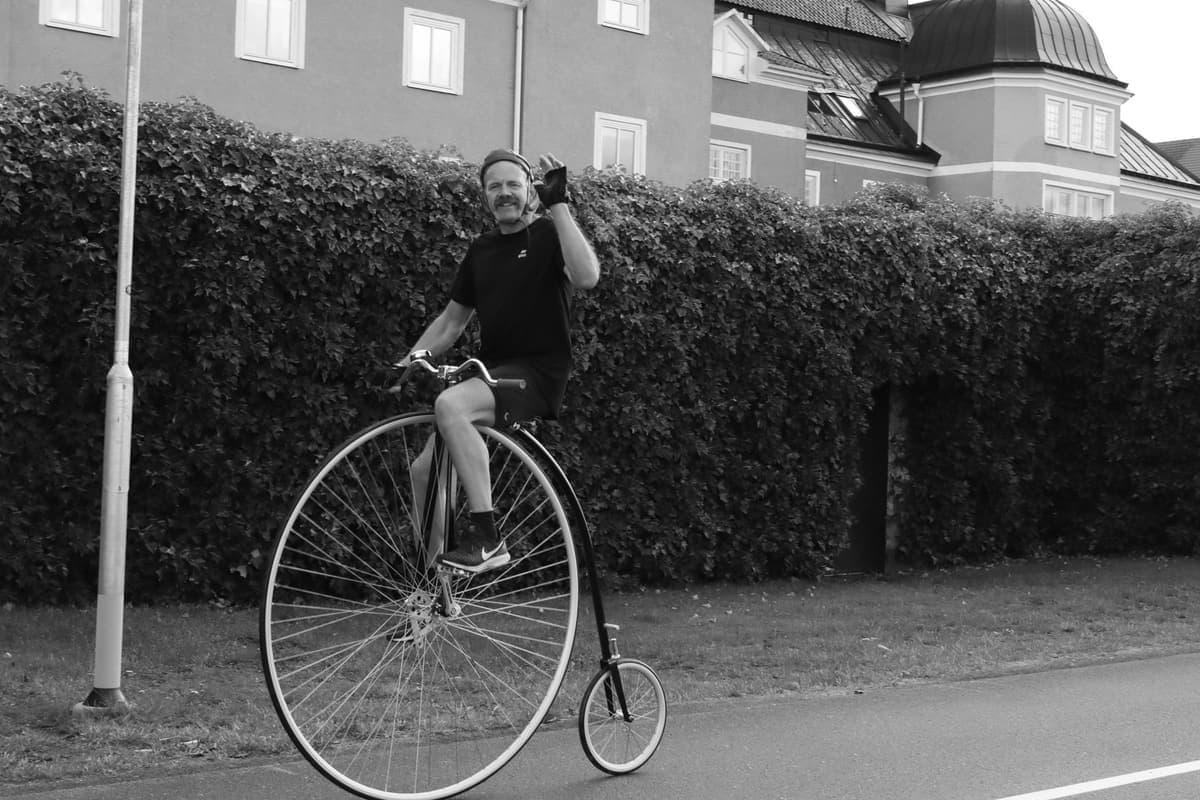
Photo: Efrem Efre on Pexels Show answer plan
- Tell him you have just seen a bicycle he won't believe, and that it looks about 150 years old.
- Describe it in a fixed order: the huge front wheel almost as tall as a person, the seat perched on top, the pedals fixed straight to that wheel, and the tiny wheel at the back.
- Give your advice and one reason linked to your brother, such as how hard it looks to climb on, or how much fun it would be in the summer parade.
Question 4
Your mother loves watching birds in her garden, and her birthday is next week. You have found this at a holiday market. Call your brother, who can't see it, describe it, and tell him whether you should buy it for her together.

Photo: Maria Tyutina on Pexels Show answer plan
- Frame the call: you are at the market and you have found a gift for Mom that is part teapot, part birdhouse.
- Describe it from top to bottom: the pale green metal teapot with its lid, the round hole where birds go in, the little metal bird on the handle, and the saucer and pole it stands on.
- Make a clear suggestion and give one reason linked to your mother, such as where it could stand in her garden.
Question 5
Your community centre is furnishing a new youth lounge, and someone has donated this seat. Call the centre's coordinator, who can't see it, describe the seat, and say whether the lounge should accept it.

Photo: K on Pexels Show answer plan
- Explain that you are looking at a donated seat that isn't a normal chair, so the coordinator knows to listen closely.
- Anchor it with a comparison ('like a child's wagon turned into a sofa'), then describe the red metal base, the four small wheels, the long pull handle and the dark red backrest painted with leaves.
- Say whether the lounge should take it, with one reason about safety, comfort or how it would look in the room.
Frequently asked questions
No. Celpip Plus wrote every question on this page in the same format as the real test, so you practise the right task with the right timing. CELPIP doesn't publish the questions it uses on test day, and no practice site has them. If you want the test maker's own samples, use the free practice tests on the CELPIP website.
Eight tasks, each with its own prompt, preparation time and recording time. They run in a fixed order, from Giving Advice to Describing an Unusual Situation, and the whole section takes about 15 to 20 minutes.
Each question on this page has a short answer plan you can open after you try it. For full model answers, every task has a template page with a complete answer, a step-by-step walkthrough and the structure behind it.
Read the prompt, start a timer for the preparation time, then speak out loud for the full response time and record yourself. Only then open the answer plan and check whether you covered each point. Saying the answer aloud matters more than planning it in your head.
No. Your test will use different prompts, and a memorised answer that doesn't fit the question loses marks for Task Fulfillment. Practise the structure for each task instead, so you can use it on any prompt.
Yes. Every task has a free practice page on Celpip Plus with the real timer and recording screen, and AI scoring on the four CELPIP criteria. The link is at the end of each task section on this page.