CELPIP Speaking
Part 3 of 8
Describing a Scene
You're shown a still image and describe what is happening in it in detail. What you picture has to reach a listener who can't see it, so precision and coverage both count.
74 practice taskssign in (free) to start
Select a practice
A taste of the set — 74 in total. The first is free; a free account opens the rest.
What this part asks of you
- A single still image to describe
- A detailed spoken description, on the clock
- Sets up the prediction task that follows
How CELPIP Speaking is scored
Every CELPIP Speaking task is marked on four criteria — Content/Coherence, Vocabulary, Listenability, and Task Fulfillment — and your recorded responses are converted to a Speaking level from 1 to 12.
How to prepare for Describing a Scene
- Describe the scene systematically, moving from foreground to background or side to side, so your description stays organized and easy to follow.
- Name specific people, objects, actions, and settings, because precise detail is what demonstrates strong Content and Vocabulary here.
- Use present-tense and present-continuous forms to describe what is happening in the still image at the moment.
Practise on the real interface
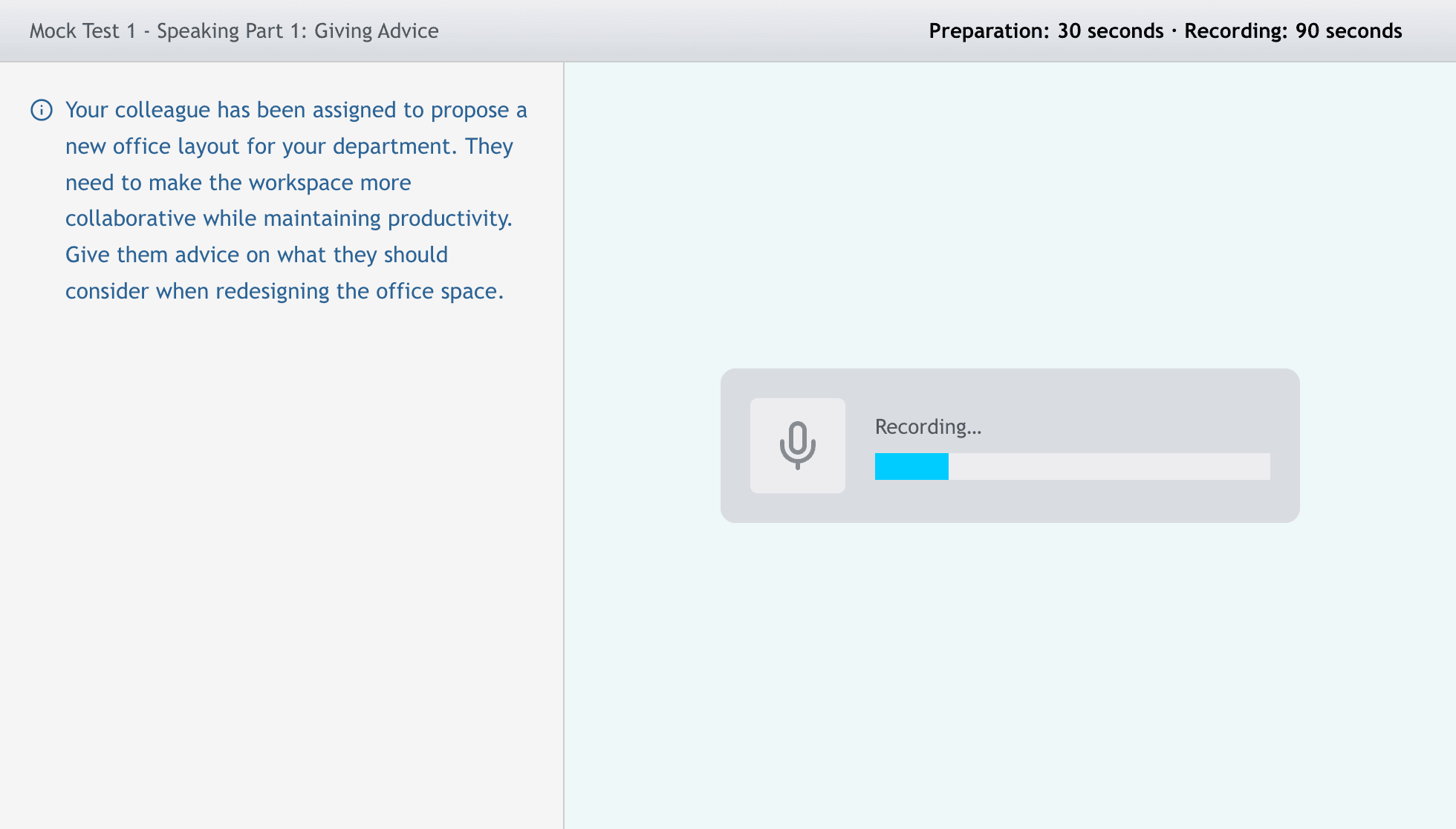
The same screen, timer and controls as test day — rebuilt so nothing on the exam is a surprise.
Describing a Scene: frequently asked questions
Use present tenses, including the present continuous, to describe what is happening in the image right now.
Move through the image in a logical order, such as front to back or left to right, so the listener can picture it without getting lost.
As much specific, relevant detail as you can — people, actions, objects, and setting — since rich detail drives your Content and Vocabulary scores.
Yes, the following task typically asks you to predict what happens next in the same image, so describe the scene thoroughly to set that up.