CELPIP Speaking
Part 6 of 8
Dealing with a Difficult Situation
You're placed in an awkward situation — a complaint, a conflict, a tricky message to deliver — and you choose how to handle it out loud. Tone is half the task: firm but appropriate.
85 practice taskssign in (free) to start
Select a practice
A taste of the set — 85 in total. The first is free; a free account opens the rest.
What this part asks of you
- An awkward or sensitive scenario
- A spoken response that manages the tone
- Marked on how you handle the person, not just the words
How CELPIP Speaking is scored
Every CELPIP Speaking task is marked on four criteria — Content/Coherence, Vocabulary, Listenability, and Task Fulfillment — and your recorded responses are converted to a Speaking level from 1 to 12.
How to prepare for Dealing with a Difficult Situation
- Read the situation carefully to judge the right tone, since handling the interaction politely and appropriately is central to this task.
- Acknowledge the other person's position before stating yours, so your approach comes across as tactful rather than blunt.
- Aim for a diplomatic solution or clear stance, using softening language to keep the exchange respectful.
Practise on the real interface
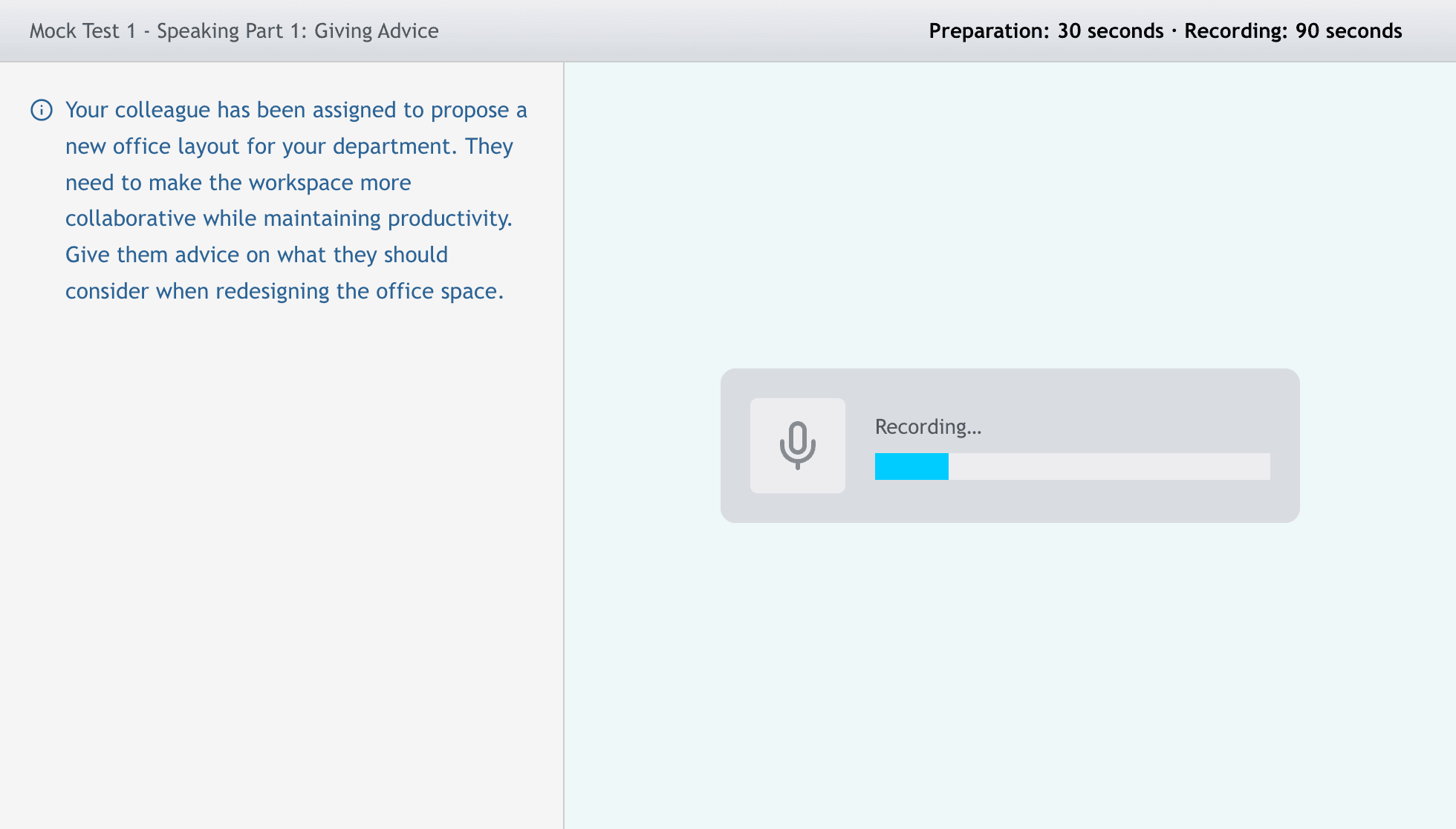
The same screen, timer and controls as test day — rebuilt so nothing on the exam is a surprise.
Dealing with a Difficult Situation: frequently asked questions
Because the task puts you in an awkward or sensitive scenario, and choosing appropriate, tactful language is a big part of doing it well.
Usually both — be clear about your position while staying courteous, since a respectful but direct approach handles the situation best.
On Content/Coherence, Vocabulary, Listenability, and Task Fulfillment, which combine into a Speaking level from 1 to 12.
They tend to be everyday but delicate scenarios where feelings or interests conflict, so you have to navigate the tension while getting your point across.