CELPIP Speaking
Part 5 of 8
Comparing and Persuading
You're given two options, asked to choose one, and then to persuade a specific person to agree. It combines comparison with a genuine persuasive purpose aimed at a named listener.
80 practice taskssign in (free) to start
Select a practice
A taste of the set — 80 in total. The first is free; a free account opens the rest.
What this part asks of you
- Two options to weigh
- A choice, then a case aimed at one person
- Persuasive language with a clear audience
How CELPIP Speaking is scored
Every CELPIP Speaking task is marked on four criteria — Content/Coherence, Vocabulary, Listenability, and Task Fulfillment — and your recorded responses are converted to a Speaking level from 1 to 12.
How to prepare for Comparing and Persuading
- Weigh both options briefly, then commit clearly to the one you are recommending so your persuasion has a firm direction.
- Tailor your reasons to the specific person described, since arguments that suit their situation are more persuasive and fulfil the task.
- Use comparative language to show why your chosen option beats the alternative for this listener.
Practise on the real interface
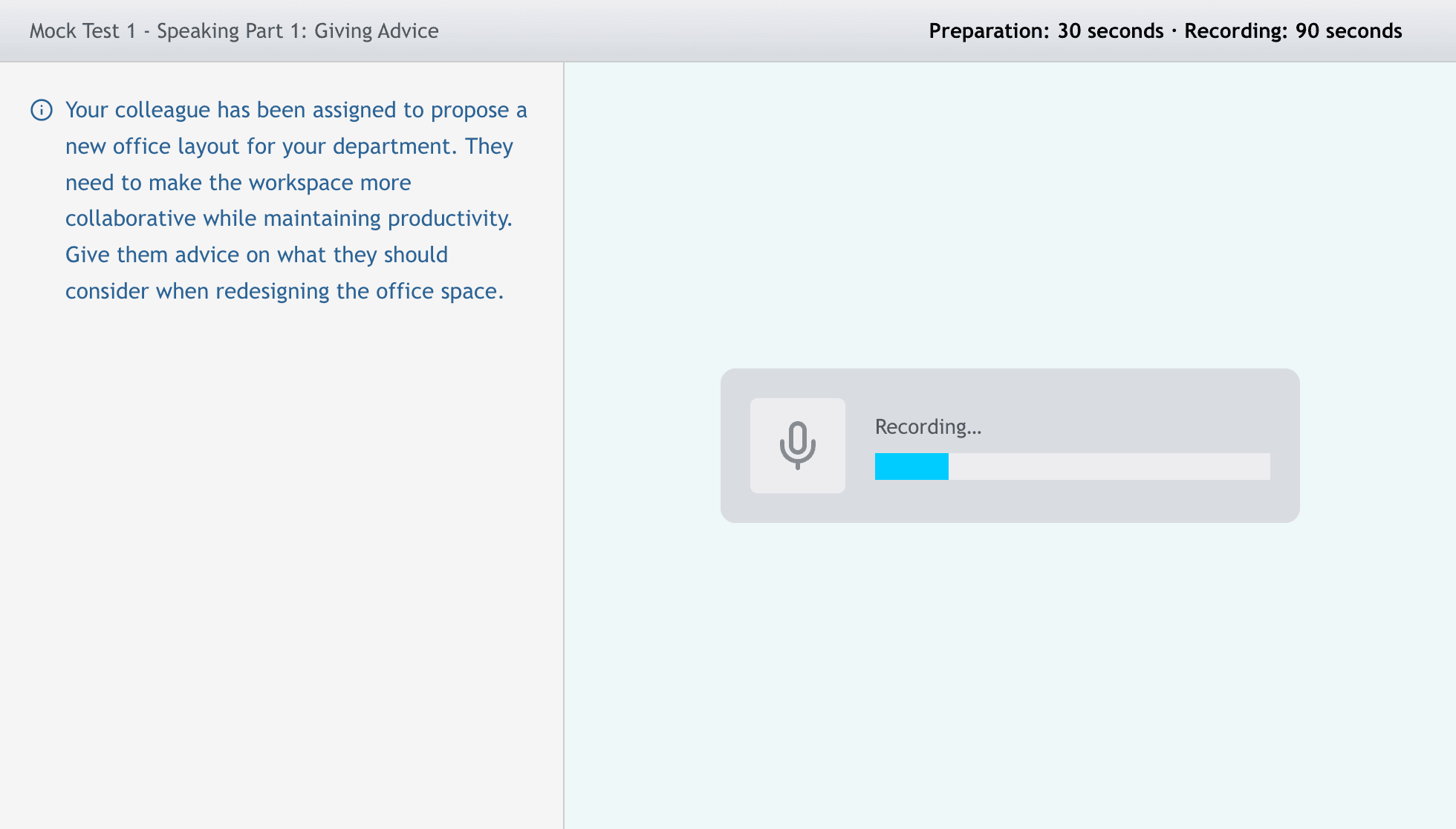
The same screen, timer and controls as test day — rebuilt so nothing on the exam is a surprise.
Comparing and Persuading: frequently asked questions
You are given two options and a specific person to advise; you compare the options and then persuade that person to choose one.
Touch on both to show the comparison, but spend most of your time making a strong case for the option you are recommending.
Because persuasion works best when tailored to that person's needs, so referencing their situation strengthens both your Content and Task Fulfillment.
Comparative structures and persuasive phrasing help you contrast the options and push clearly toward your recommendation.