CELPIP Speaking
Part 4 of 8
Making Predictions
Using the same image from the previous task, you predict what will happen next. It tests future forms and reasoning — saying what's likely and why, not just what you see.
69 practice taskssign in (free) to start
Select a practice
A taste of the set — 69 in total. The first is free; a free account opens the rest.
What this part asks of you
- The same scene, projected forward
- Predictions with reasons, spoken and timed
- Future-tense range and plausibility
How CELPIP Speaking is scored
Every CELPIP Speaking task is marked on four criteria — Content/Coherence, Vocabulary, Listenability, and Task Fulfillment — and your recorded responses are converted to a Speaking level from 1 to 12.
How to prepare for Making Predictions
- Use future forms confidently — will, going to, and might — since predicting what happens next is the core of this task.
- Base your predictions on clues visible in the same scene, so your guesses feel grounded rather than random.
- Offer a few linked predictions with brief reasons to fill the time and show developed Content.
Practise on the real interface
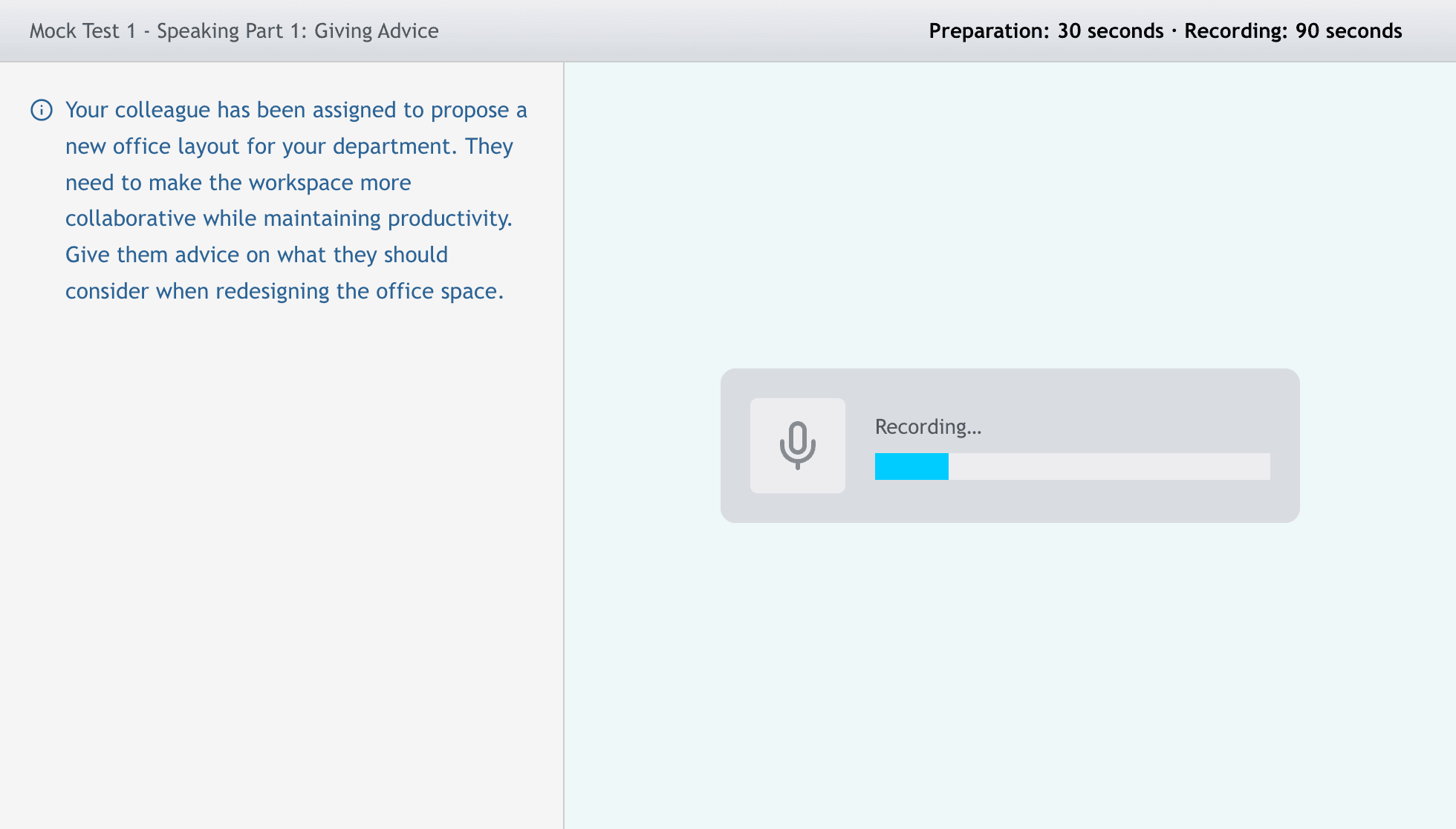
The same screen, timer and controls as test day — rebuilt so nothing on the exam is a surprise.
Making Predictions: frequently asked questions
Use future forms such as will and going to, along with modals like might or could, to talk about what is likely to happen next.
Base them on the details of the same scene you just described, so your predictions connect logically to what is already in the image.
It is marked on Content/Coherence, Vocabulary, Listenability, and Task Fulfillment, feeding into a Speaking level from 1 to 12.
There is no right answer to predict; you are assessed on how clearly and plausibly you express what might happen, not on being correct.